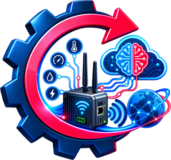
 RETROFIT
Don't Replace It.
Upgrade It.
Connect existing equipment to AI without replacing the machine.
SENSORS → IoT → CLOUD → AI
Talk to an engineerHow the data gets out
No machine replacement. No control system replacement.
We add an independent intelligence layer around your existing equipment.
- Existing machineStays exactly as it is. Its own controller, its own cycles, its own certification.
- External sensor or existing portWe read what the machine already produces, or add a probe outside it.
- GatewayCollects, converts and forwards. Outbound only.
- Cloud and AIStorage, analysis, alerts and reports.
The original machine continues to operate independently. If our layer stops, the machine does not.
The sites nobody quotes for
A thirty-bed hospital has the same vaccine refrigerator as a university hospital. The same autoclave. The same cold room, the same incubator, the same oxygen concentrator. It carries the same regulatory obligations, and it faces the same consequences when a compressor fails on a Friday night.
What it does not have is a supplier willing to make the trip. Tenders for small facilities go out and come back empty. Not because the need is smaller, but because the volume does not justify a project team, a site survey and a three-week installation.
Why a retrofit changes that calculation
What is installed is a set of sensors, a gateway and a subscription. That is within reach of a local company that already services the equipment — and it is the reason a facility too small for a supplier is not too small for us.
Who ends up served
District and county hospitals. Private clinics. Dialysis units. Laboratories. Pharmacies and vaccine depots. Veterinary practices. Nursing homes. Any site whose equipment is exactly as critical as a large hospital's, and exactly as unattended.
This is not a discount version of a large-hospital product. It is the same platform, the same thresholds, the same records — delivered through a route that a small site can actually buy.
Sectors we work in
Connect almost any machine
Where the equipment already exposes data, we read it through the interface the manufacturer provided.
No interface at all? External sensors are fitted around the machine instead. Nothing inside it is modified.
Send data from anywhere
The link out of the site is chosen after measuring what actually works there, not before.
Radio equipment must be type-approved in the country where it is installed. We only supply what is approved for your market.
Four ways a machine gets connected
Which one applies depends on what your equipment already exposes and what the site allows.
A. No data output at all
Machine → external sensor → RS-485 → edge gateway → cloud → AI
Older equipment with no port. A probe is fitted outside the machine and reads what it does without touching it.
B. Existing controller
Legacy PLC → Modbus RTU → gateway → MQTT over TLS → cloud → AI
The machine already speaks a field protocol. The gateway polls it in read-only mode and forwards the values.
C. Several machines, no cabling possible
Sensors → LoRaWAN → gateway → internet → AI
Equipment scattered across a site. One gateway collects many low-rate sensors over long distances.
D. Analogue signal only
PT100 → transmitter → RS-485 / Modbus → gateway → cloud → AI
A raw sensor output is converted into a digital reading before leaving the machine room.
Radio links are only proposed where the equipment is type-approved for that country. Wired chains carry no such constraint.
One platform, one sensor chain
The same measurement chain serves every programme. What changes is the sensor set and the thresholds.
Sensors and signal converters carry no radio transmitter, so they need no type approval anywhere. Only the gateway does.
From machine data to decisions
- MonitorContinuous readings from equipment that previously told you nothing.
- DetectDeviations from the normal behaviour of that specific machine.
- PredictDegradation trends that precede a failure.
- AlertEmail and API notifications when a threshold or a pattern is crossed.
- ReportAutomatic records, exportable for audits and quality reviews.
- OptimiseEnergy use, maintenance intervals and process settings.
Anomaly detection and failure prediction run on time-series statistics, not on a language model. The analysis stays on our own infrastructure.
Retrofit programmes
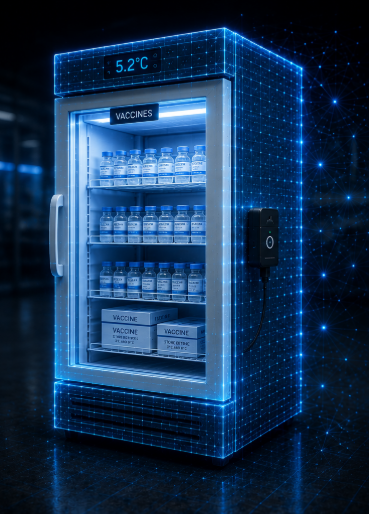
FridgeConnect IoT
Medical refrigerators, vaccine fridges, freezers
Temperature excursion detection and cold chain records
Platform ready
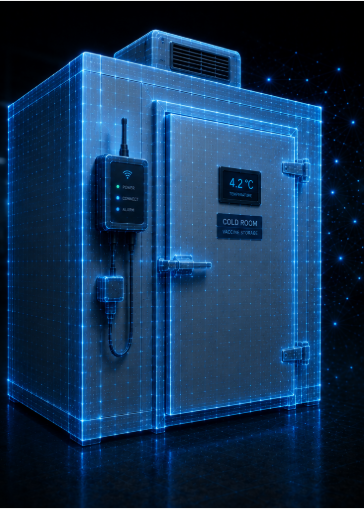
ColdRoomConnect IoT
Cold rooms and walk-in storage
Temperature mapping, door events and energy use
Platform ready
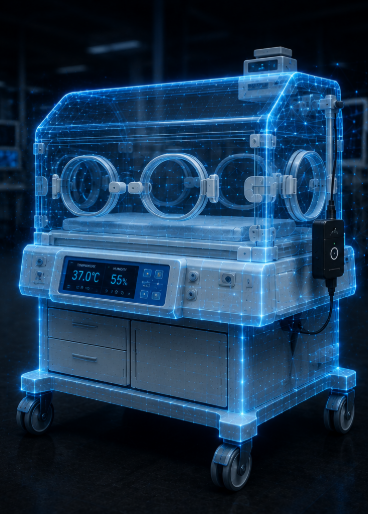
IncubatorConnect IoT
Laboratory and biological incubators
Set-point drift and door-opening impact
Platform ready

OxygenConnect IoT
Oxygen concentrators and medical gas systems
Output monitoring and supply continuity
Programme in development
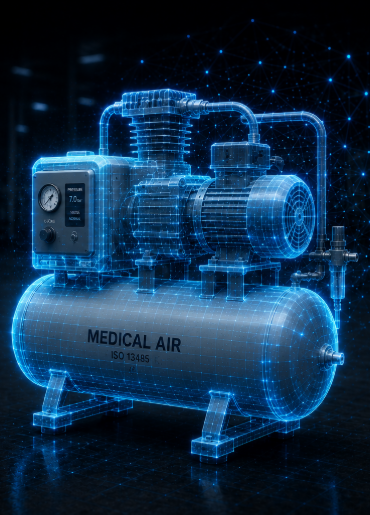
CompressorConnect IoT
Medical and dental air compressors
Predictive maintenance and duty-cycle analysis
Programme in development
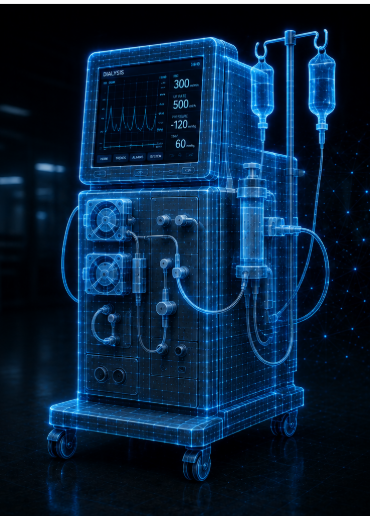
DialysisConnect IoT
Dialysis machines and water treatment loops
Water quality, cycle records and equipment health
Programme in development
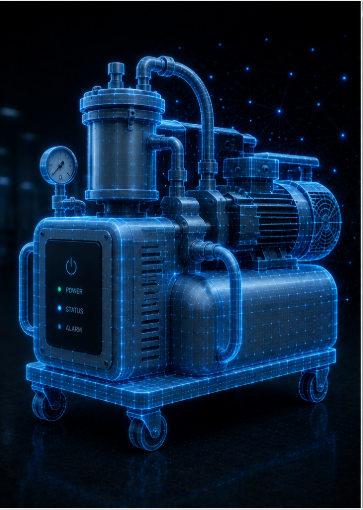
PumpConnect IoT
Vacuum pumps and suction systems
Failure detection and performance drift
Programme in development
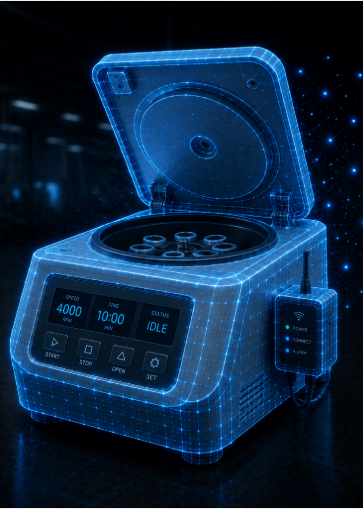
LabConnect IoT
Ultra-low temperature freezers and laboratory storage
Early drift detection and audit-ready records
Platform ready
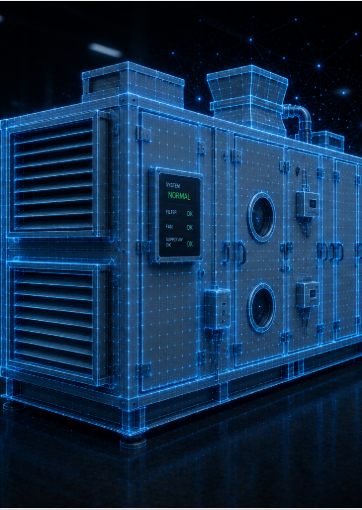
HVACConnect IoT
HVAC and clean-room air handling
Energy performance and filter condition
Programme in development
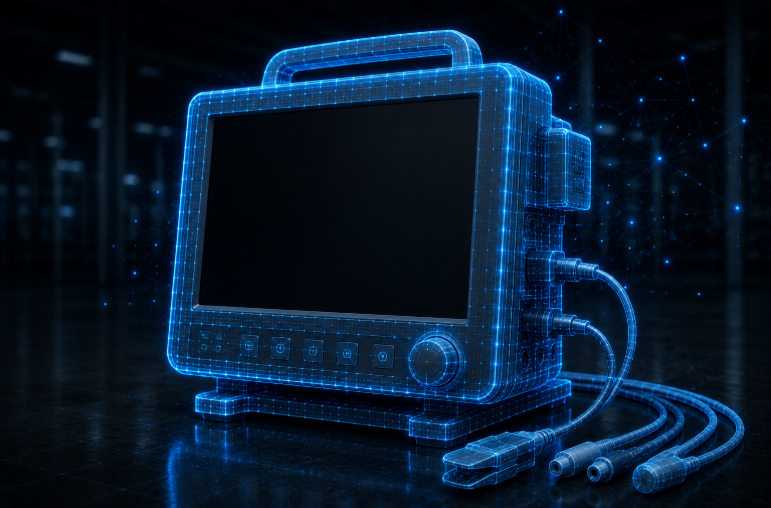
PatientMonitorConnect IoT
Legacy patient monitors
Device status, battery, technical alarms and availability
Programme in development
Every site is different
Signal coverage, protocol, distance to the panel and the number of machines all change the answer. Tell us what you run and we will tell you what is possible.
Start the conversation